
Film Editor Simon Smith on Editing Workflow, Collaboration, and the Future of Post-Production
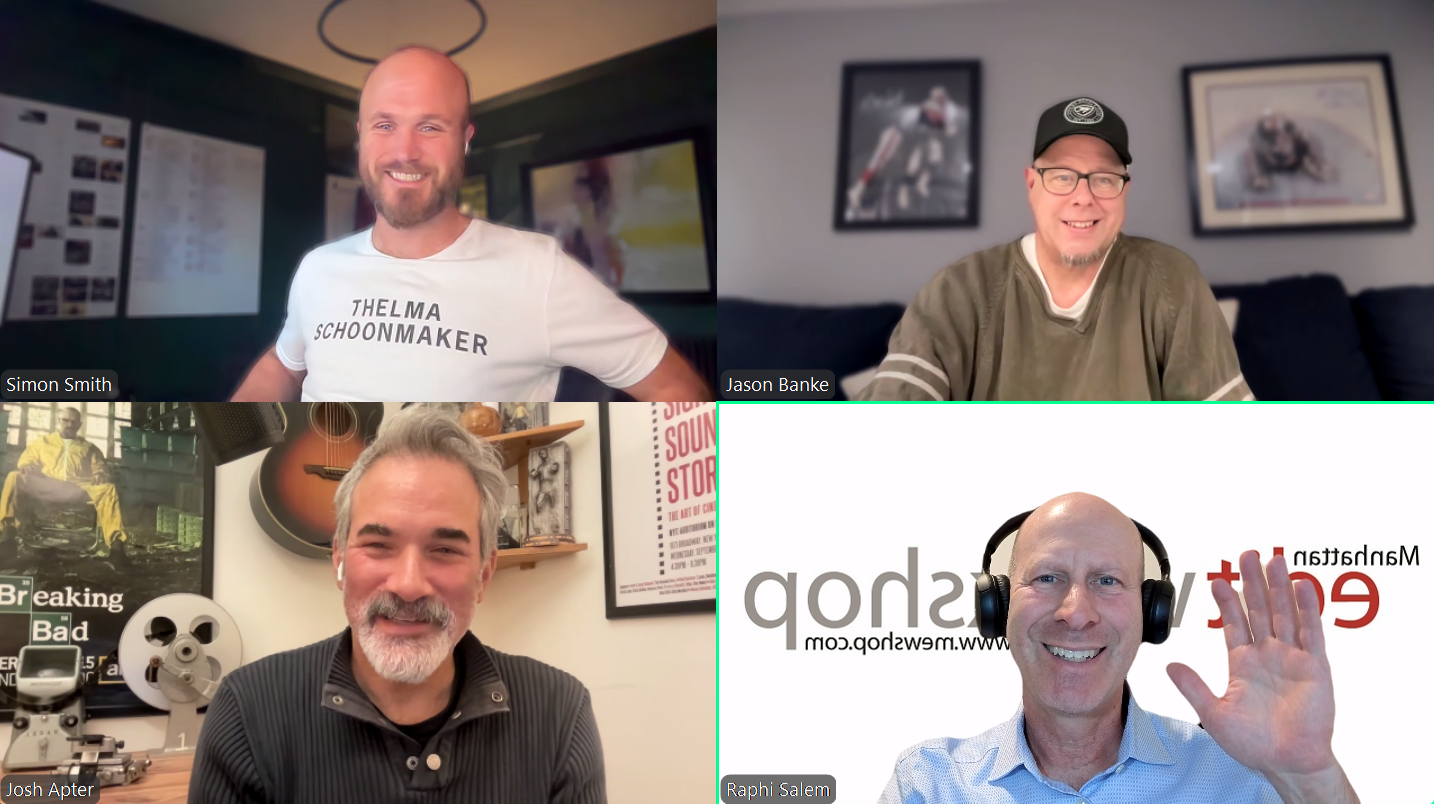
Manhattan Edit Workshop recently welcomed award-winning film and television editor Simon Smith for an in-depth conversation on Talking MEWShop, MEW’s ongoing interview series spotlighting leading voices in professional film editing and post-production. Hosted by Raphi Salem, with MEW founder Josh Apter and producer Jason Banke, the discussion explored Smith’s editing workflow, career path, and the future of television editing in a rapidly evolving industry.
Smith is best known for his work on acclaimed TV dramas including Andor, Chernobyl, The Last of Us, Industry, and Three Body Problem. His career offers a masterclass in how editors build long-term success through collaboration, technical fluency, and storytelling instincts.
From Film School to the Edit Bay: Building a Post-Production Career
Smith began his journey into professional film editing after studying film at a London university. While working as a production runner on set, he quickly realized that the edit bay—not the set—was where he felt most at home.
“Editing felt immediate,” Smith explained. “You could try ideas instantly, refine performances, and shape story in real time.”
That realization led him to pursue a post-production career, working his way up from runner to assistant editor and eventually first assistant before cutting his first episode. His early technical advantage came from learning Final Cut Pro at a time when few editors were using it, demonstrating how mastering emerging tools can open doors in the editing industry.
Editing Software and Workflow: Why Avid Media Composer Still Dominates TV Drama
Today, Smith edits exclusively on Avid Media Composer, the industry standard for high-end television editing and long-form drama—particularly in the UK. According to Smith, Avid’s strength lies in collaboration.
“On large TV productions, you might have 10 to 20 people working in the same project,” he said. “Avid is built for that level of professional collaboration.”
While Smith admires features found in other editing platforms—such as Final Cut Pro’s magnetic timeline—he credits Avid ScriptSync as his most essential tool. Script-based editing allows him to work quickly, explore performance options, and iterate freely.
“My edits come through iterations,” Smith said. “I do many rough versions before finding the best one.”
This approach reflects a modern editing workflow where speed, flexibility, and storytelling intuition work together.
Editing at Scale: Collaboration on The Last of Us and Andor
Smith’s work on HBO’s The Last of Us exemplifies large-scale television editing at its highest level. Editing alongside fellow editors in adjacent cutting rooms, Smith described a deeply collaborative environment guided by showrunner Craig Mazin.
“It felt like a creative family,” Smith said. “Everyone was focused on making the show better.”
Similarly, Smith’s work on Andor—particularly the now-iconic prison arc—demonstrates how editors often discover the cultural impact of their work only after release. “Sometimes it’s good not to know,” he said. “You focus on the story, trust the process, and let the work speak for itself.”
AI in Editing: Why Human Collaboration Still Matters
One of the most compelling parts of the conversation centered on AI in post-production. Smith was clear: on the high-security productions he works on, AI tools are largely restricted, and philosophically, he remains skeptical.
“Filmmaking is the most collaborative art form,” Smith said. “Replacing people with AI undermines what makes film and television meaningful.”
While he acknowledges that emerging editors may need to understand new technologies to stay competitive, Smith emphasized that AI should never replace human intuition, creative judgment, or collaboration.
Learning from Legends: Thelma Schoonmaker and the Art of Editing
Smith’s admiration for legendary editor Thelma Schoonmaker reflects his respect for editing as a lifelong craft. Recalling a late-night encounter with Schoonmaker still working in the edit bay, Smith summed up his philosophy simply: “Be more Thelma.”
Her commitment to creativity, precision, and collaboration remains a guiding influence on his work.
Advice for Aspiring Film and Television Editors
For those pursuing careers in professional film editing or television post-production, Smith offered clear guidance:
Learn emerging tools early
Watch films and television critically
Stay adaptable
Value your collaborators
Never lose sight of storytelling
“We’re at a turning point in how content is made,” Smith said. “But great editing will always be about people.”
Manhattan Edit Workshop: Training the Next Generation of Editors
Conversations like this reflect Manhattan Edit Workshop’s mission: to connect aspiring editors with industry professionals and provide real-world insight into editing careers. Through classes, workshops, and programs like the Six-Week Art of Editing, MEW continues to support editors at every stage of their journey.
For more interviews, editing resources, and professional training, visit mewshop.com.